

Why Reinventing Your Guest List Matters (Without the Drama)

Planning a wedding today means balancing emotion, budget, and logistics while avoiding conflict. If you're wondering how to make meaningful choices without upsetting family or friends, this guide gives you 7 practical ways to reinvent your guest list and keep the peace. Throughout this piece we'll reference the idea of a Casino overview rating as a helpful metaphor and planning tool — it’s a compact way to think about prioritizing guests and measuring impact, especially if you’re weighing trade-offs like budget vs. experience.
Quick primer: key terms to know
Before we jump into tactics, a few technical terms will help: guest segmentation (grouping guests by relationship type), RSVP management (tracking replies and plus-ones), and seat mapping (creating a seating chart to optimize space). Understanding these will make it easier to apply the 7 methods below with confidence.
7 Ways to Reinvent Your Guest List
Here are structured, doable steps you can take today. Each approach can be evaluated using a simple Casino overview rating lens — think of it as a score that balances emotional importance, logistical difficulty, and cost impact.
-
Define clear priorities first
Start with a short list: immediate family, closest friends, and any essential vendors or participants. Create a simple rubric and give each person a score — this is where a Casino overview rating comparison helps: assign a numerical value to emotional importance, then to logistics and budget impact. When everything has a number, decisions feel objective.
-
Group guests with guest segmentation
Segment guests into cohorts like family, childhood friends, college friends, coworkers, and community groups. Use that segmentation to set rules — for example, one representative from each workplace or two family members per household. A segment-based approach mirrors how a casino might rank games by popularity in a Casino overview rating — you can prioritize the highest-scoring groups for invitations.
-
Set and communicate firm boundaries
Be upfront about capacity and priorities. A polite wedding website note or a pre-invite conversation can prevent surprises. When you communicate the limits clearly, you're using the same transparency principle as a public Casino overview rating, where expectations are set in advance.
-
Use tiered invitations
Send initial invites to your core group and hold a second wave for extended guests. That phased approach can reduce stress and give you better RSVP control. Think of the first wave as "high-rated" in your internal Casino overview rating, and the second as conditional — invite them only if capacity allows.
-
Make strategic plus-one rules
Plus-ones can balloon counts quickly. Consider limiting plus-ones to long-term partners or only to guests above a certain age. This policy should be part of your invite copy and managed via clear RSVP deadlines — similar to how a trustworthy Casino overview rating clarifies who qualifies for VIP perks.
-
Offer alternatives for those who won’t be invited
For guests you love but can’t seat, offer alternatives like a post-wedding brunch, a livestream, or a recorded highlights reel. This maintains relationships while keeping headcount under control. If you present alternatives thoughtfully, the social trade-off aligns with a fair Casino overview rating approach — assigning value without creating winners and losers.
-
Audit and finalize with a data-driven table
Compile a final list with columns for relationship, estimated cost per guest, emotional score, and your internal Casino overview rating. That makes decisions less about feelings and more about priorities. Use the table below as a template to visualize how your list trims down.
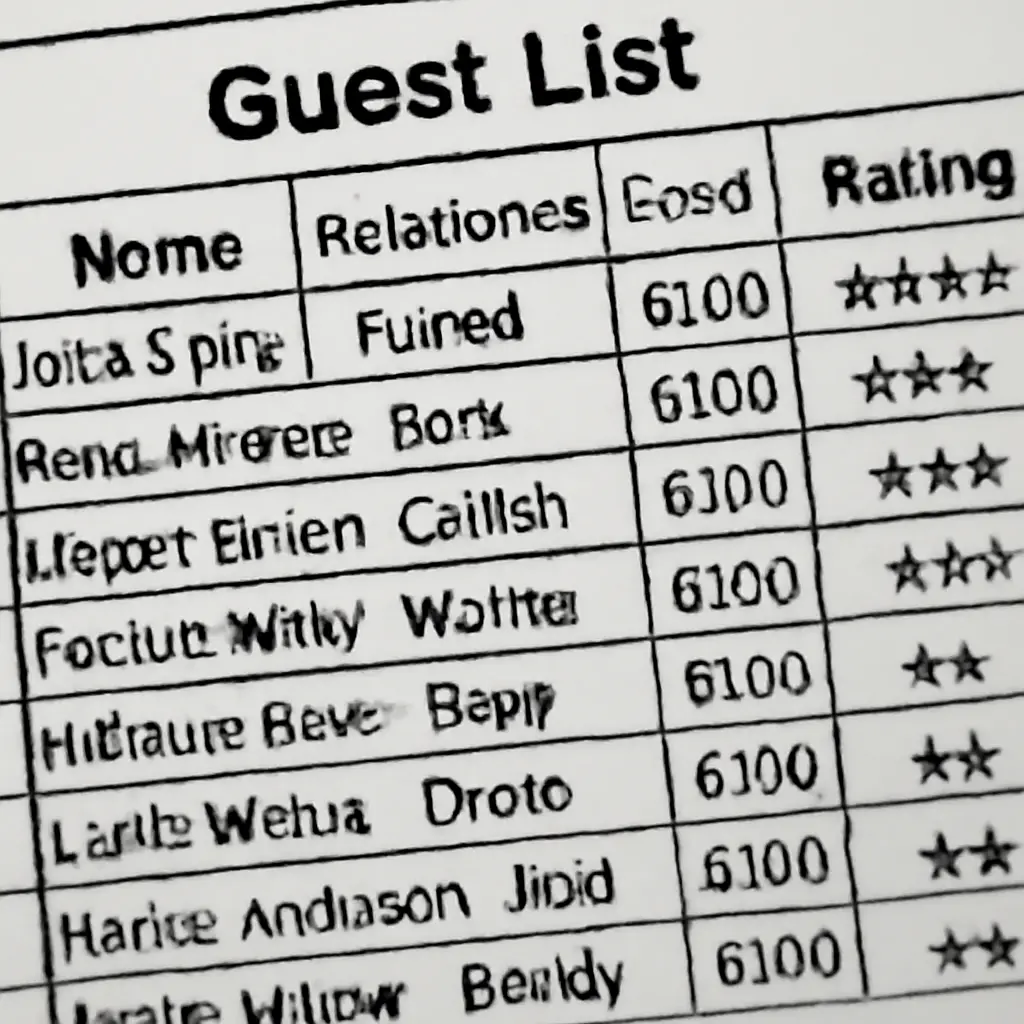
Below is a sample table you can adapt. It helps you compare each invitee objectively and supports conversations with family if needed.
| Guest / Group | Relationship | Estimated Cost | Emotional Score (1-10) | Casino overview rating |
|---|---|---|---|---|
| Immediate family | Family | $0–$100 per person | 9 | High |
| Close friends | Friends | $75–$150 per person | 8 | High |
| Work colleagues | Work | $75–$150 per person | 5 | Medium |
| Distant relatives | Family | $75–$150 per person | 4 | Low |
Practical Tools and Communication Templates
Use RSVP software, collaborative spreadsheets, or a private planning group chat to keep everyone aligned. When someone questions an exclusion, offer a short, empathetic script: “We love you and wish we could include everyone; we’re keeping the ceremony under X people to match the venue and our budget.” Framing that message with numbers from your guest table and your Casino overview rating makes it feel less personal and more logistical.
Short templates to borrow
- Website note: “Due to venue capacity, we’ve prioritized immediate family and long-term partners.”
- Phone script: “We’re doing a very small ceremony to match the venue size — we hope you understand.”
- Alternative offer: “We’ll host a casual brunch after the ceremony and share photos and a livestream.”
When Tradition Clashes With Practicality
It's common to face pressure rooted in long-standing etiquette. If you want modern solutions, check resources about modern etiquette for alternatives that respect relationships without inflating the guest count. Bringing facts — like your budget spreadsheet and a clear Casino overview rating — into family conversations helps keep them calm and rational.
Handling pushback
Expect some objections. Respond with a calm explanation and an alternative invite to a post-wedding event. Remember that your decisions are about creating the best day for the guest of honor, not satisfying every possible expectation. A consistent rationale — such as citing your capacity or a budget score from your Casino overview rating — reduces the chance of repeat arguments.
Checklist: Final Steps Before Sending Invites
Use this quick checklist to confirm you’re ready to send final invites. Each item reduces confusion and helps keep drama to a minimum.
- Finalize the guest table and confirm totals against venue capacity.
- Double-check plus-one policies and age cutoffs.
- Prepare the wedding website language and RSVP deadlines.
- Schedule a short family call if there are sensitive omissions.
- Set up a streaming option for distant guests who are not invited.
While doing these steps, repeatedly review your Casino overview rating framework to ensure decisions remain consistent and defensible.
Conclusion: Keep the Focus on What Matters
Reinventing your guest list doesn't have to mean hurt feelings or family drama. With clear priorities, transparent communication, and a simple scoring tool like a Casino overview rating, you can create a thoughtful, manageable list that reflects your values and constraints. Remember: the best weddings focus on connection, not headcount. If you need help applying these ideas to your own list, start with the table above and the tiered invite strategy — they’ll give you tangible outcomes and a calm process to follow.



To leave a comment, please sign up or log in
Log in / Sign up